
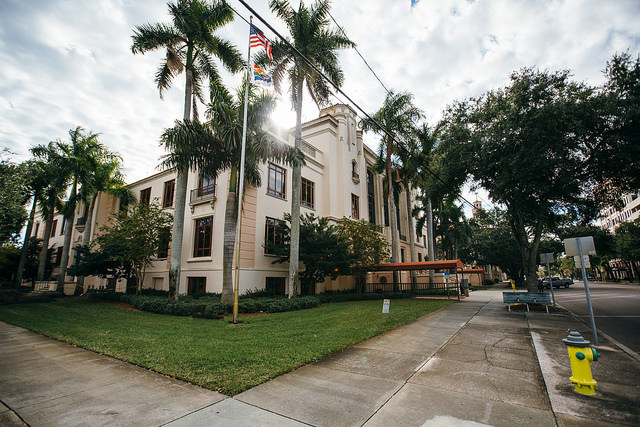
The countdown to St. Petersburg’s 2026 municipal elections has quietly begun, with potential candidates already sizing up races and community groups outlining priorities. While the official filing period is still more than a year away, the decisions made at the ballot box in November 2026 will profoundly shape the city’s direction for years to come. From housing affordability to waterfront development, these elections will determine who steers St. Pete through its next chapter.
The stakes are high. Every City Council seat will be on the ballot, and the mayor’s office – currently held by Ken Welch – will also be up for grabs. These seven council members and the mayor make critical decisions impacting everything from property taxes and public safety to zoning changes and park maintenance. For residents, these elections are about more than just names on a ballot; they’re about their neighborhoods, their pocketbooks, and their vision for the future of the Sunshine City.
Mayor Ken Welch, who took office in 2022, is widely expected to seek re-election. His first term has been defined by efforts to address housing affordability, advance the redevelopment of the Tropicana Field site, and improve city services. However, challengers are likely to emerge, eager to present alternative visions for the city’s trajectory.
Welch’s Record Under Scrutiny
Mayor Welch’s administration has focused on several key initiatives, including the “Housing Opportunities for All” plan, which aims to increase affordable housing options across the city. The plan, outlined on the city’s website, includes strategies like incentive programs for developers and leveraging public land.
“The mayor’s office has made affordable housing a central pillar,” said Dr. Susan MacManus, a retired political science professor from the University of South Florida. “Voters will be looking closely at concrete results of those policies as we get closer to 2026.”
Another hallmark of Welch’s term has been the selection of Hines and Tampa Bay Rays as the master developer for the 86-acre Tropicana Field site, now rebranded as the Historic Gas Plant District. This monumental project, detailed in city council meeting minutes from January 2024, promises to transform a significant portion of downtown St. Petersburg into a mixed-use development with housing, retail, office space, and a new ballpark.
“The Gas Plant redevelopment is arguably the biggest project this city has seen in decades,” stated Mark Landis, president of the St. Petersburg Chamber of Commerce. “How that project progresses between now and the election will be a major talking point.”
Potential Challengers and Emerging Themes
While no official challengers have announced their candidacies, speculation points to several individuals who might consider entering the mayoral race. These often include current or former city council members, as well as prominent local business and community leaders.
“The mayor’s race is always the marquee event,” said longtime St. Pete political observer, Patricia Davis. “Expect discussions to revolve around the pace of development, infrastructure needs, and the balance between growth and preserving St. Pete’s character.”
One recurring theme for challengers could be the perception of rapid development and its impact on neighborhoods. Concerns about traffic, green space, and the displacement of longtime residents often surface in growing cities like St. Petersburg.
As St. Petersburg gears up for its pivotal 2026 election battles, the implications for the city’s political landscape are becoming increasingly apparent. In light of these developments, readers may find it insightful to explore the article on technological advancements and their influence on local governance, which can be found here: Technology’s Role in Shaping Local Governance. This piece delves into how emerging technologies are impacting political strategies and voter engagement, providing a broader context for understanding the dynamics at play in St. Pete’s upcoming elections.
City Council Seats: Neighborhood Voices
All eight City Council seats – representing seven districts and two at-large positions – will be up for election in 2026. These races are often more localized, reflecting the unique concerns and priorities of individual neighborhoods. Council members play a crucial role in approving budgets, passing ordinances, and representing their constituents’ interests at City Hall.
District-Specific Issues to Watch
Each district brings its own set of challenges and opportunities. For example, District 1, which includes neighborhoods like Historic Old Northeast and Snell Isle, often focuses on preservation efforts and waterfront access. District 3, encompassing parts of Central Avenue and Grand Central District, grapples with balancing commercial vibrancy with residential quality of life.
“District races are where the rubber meets the road for many residents,” explained Robert Sanchez, a community activist in South St. Petersburg. “Voters want to know their council member will advocate for their specific neighborhood issues, whether it’s potholes, park improvements, or addressing crime.”
District 6, covering parts of South St. Petersburg, will likely see discussions around economic development, affordable housing, and equitable access to resources. The city’s Equity Indicators Report, available on the city’s website, provides data on disparities that candidates in these areas may highlight.
At-Large Positions: Broadening the Perspective
The two at-large council seats require candidates to appeal to voters across the entire city. These individuals often focus on city-wide issues and big-picture planning. The ability to build consensus and work collaboratively with district council members is key to success in these races.
“At-large council members need to demonstrate a broad understanding of the city’s diverse needs,” noted Dr. MacManus. “They often become crucial bridge-builders between different neighborhood interests.”
Key Issues Shaping the Debates
Several overarching issues are expected to dominate the 2026 election cycle, resonating differently across various demographics and neighborhoods.
Housing Affordability Crisis
St. Petersburg, like many Florida cities, is grappling with a severe housing affordability crisis. Rising rents and home prices have made it challenging for many residents, particularly those in essential service jobs, to live where they work. This issue touches all segments of the population – from families struggling to find a home to small businesses struggling to retain employees.
The city has implemented various programs and initiatives to address this, as detailed in the city’s Housing Department reports. However, the effectiveness of these efforts and the need for more aggressive solutions will undoubtedly be central to campaign platforms. Candidates will likely propose solutions ranging from increased density and inclusionary zoning to rental assistance programs and land trusts.
Waterfront Development and Preservation
The city’s iconic waterfront is a cherished asset, but ongoing development pressures raise questions about its future. The redevelopment of the Pier District, the ongoing discussions around the Gas Plant site’s connection to the bay, and the potential for future projects along the waterfront will all be subject to public scrutiny.
“Our waterfront is what makes St. Pete special,” said Emily Chen, a member of the Friends of St. Pete Parks advocacy group. “Candidates need to articulate a clear vision for how they will protect public access, green spaces, and the ecological health of the bay, while also allowing for responsible development.”
Concerns over sea-level rise and coastal resilience will also feature prominently, with voters looking for concrete plans to protect infrastructure and neighborhoods from the impacts of climate change. The city’s Resilient St. Pete plan, available online, outlines some of these strategies.
Public Safety and Community Trust
Public safety remains a perennial concern for residents. While St. Petersburg has seen a decrease in some crime categories according to St. Petersburg Police Department annual reports, perceptions of safety and community trust in law enforcement are always a factor in elections.
Candidates will likely discuss strategies for crime prevention, police-community relations, and addressing the root causes of crime through social programs and economic opportunity. The balance between enforcement and community-based solutions will be a key differentiator among candidates.
Infrastructure and Transportation
With a growing population, St. Petersburg’s infrastructure is under increasing strain. Roads, stormwater systems, and public transit all need significant investment. The PSTA (Pinellas Suncoast Transit Authority) long-range plan includes proposals for enhanced bus services and potential future transit solutions, which candidates may support or critique.
“Traffic is a constant complaint for many residents,” said lifelong St. Pete resident, David Peterson. “We need leaders who will prioritize smart solutions, not just more roads, but better public transit and walkable communities.”
Funding for these projects, whether through city bonds, state grants, or federal programs, will be a major discussion point, impacting taxpayers directly.
The Role of Activism and Special Interest Groups
Beyond the candidates themselves, various community groups, advocacy organizations, and special interest groups will play a significant role in shaping the election narrative. Environmental groups, business associations, neighborhood associations, and social justice organizations will endorse candidates, host forums, and launch public awareness campaigns.
“Grassroots efforts can make a real difference in local elections,” noted Dr. MacManus. “Door-knocking, phone banks, and local forums organized by these groups help inform voters and mobilize support.”
For instance, groups focused on environmental protection will scrutinize candidates’ stances on issues like preserving shorelines and promoting renewable energy. Business groups will likely advocate for policies that support economic growth and reduce regulatory burdens. Neighborhood associations will push for localized improvements and protections.
As St. Petersburg gears up for its 2026 election battles, the political landscape is becoming increasingly complex, with various issues influencing voter sentiment. A recent article explores how unexpected events, such as sudden blackouts, have raised concerns among residents and could impact their choices at the polls. Understanding these dynamics is crucial for anyone interested in the future of the city’s governance. To read more about the implications of these alarming news events, check out the article here.
Campaign Finance and Transparency
Campaign finance will be a closely watched aspect of the 2026 elections. Details on donations and expenditures for municipal elections are publicly available through the City Clerk’s office once candidates officially file. Transparency in campaign funding allows voters to see who is supporting particular candidates and potentially identify influence.
“Understanding where campaign money comes from helps residents evaluate a candidate’s potential priorities,” explained a representative from the local League of Women Voters chapter, which often hosts candidate forums and advocates for good governance.
The use of political action committees (PACs) and independent expenditures will also be under scrutiny, as these can significantly impact the financial landscape of a campaign.
As St. Petersburg gears up for its 2026 election battles, the implications for the city’s political landscape are becoming increasingly evident. A recent article explores how these upcoming elections could redefine local governance and community engagement. For a deeper understanding of the dynamics at play, you can read more in this insightful piece about the city’s evolving political scene. Check it out here.
The Road Ahead: Engaging the Electorate
The 2026 elections are more than just a political contest; they are a critical civic exercise that will shape St. Petersburg’s trajectory. For residents, this means staying informed, asking questions, and participating in the democratic process.
Community forums, candidate debates, and engaging with neighborhood associations are excellent ways for residents to learn about the issues and the individuals vying for public office. The City Clerk’s office website provides information on voter registration and election dates.
The decisions made in 2026 will determine whether St. Petersburg continues its current path or takes a new direction on critical issues like growth, affordability, and environmental protection. For “The Sunshine City,” these are not just battles for political power, but a collective effort to define its future.

Leave a Reply